
Picture the scene, you’ve done yourself proud and tried a new class, maybe you increased your weights or walked/ran for longer. You feel great immediately afterward… but you know you will pay for it tomorrow with stiff tender muscles that make your arms and legs feel like lead. You’re wondering how to get rid of DOMS (delayed onset muscle soreness) fast.
Thankfully, we don’t experience the pain after every exercise session, but when you do something unfamiliar or particularly strenuous, DOMS usually develops several hours after and builds over the next 24 to 48 hours.
It doesn’t just impact athlete’s training to enhance their performance. We all know the feeling of getting out of bed and feeling the hamstrings pull, and the abs ache. Whether we are a casual gym-goer, simply returning to exercise after a break, trying something new to shake up the routine or just getting on with some of life’s more manual tasks, such as gardening or DIY, we all want to avoid the feeling.
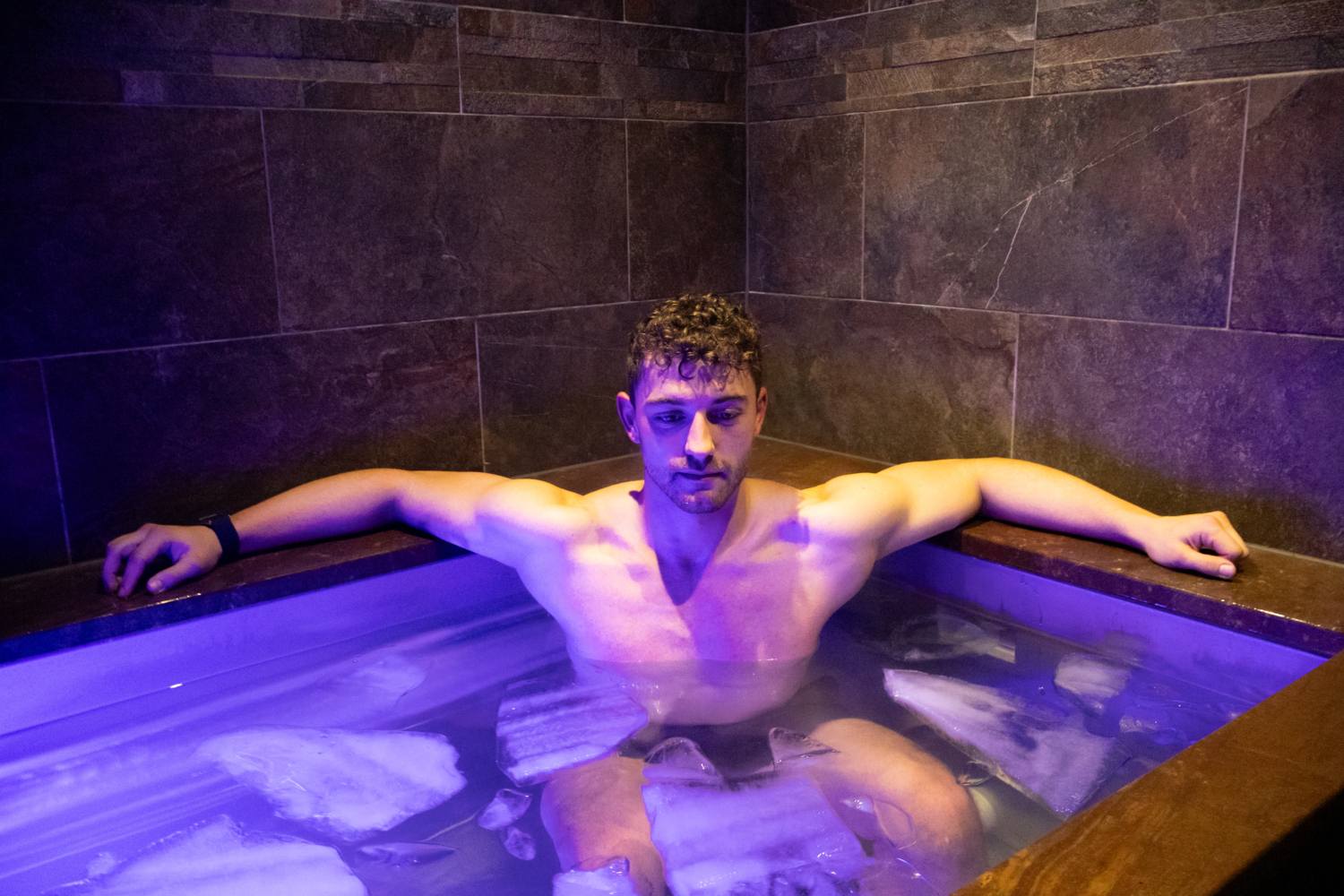
So how do you get rid of DOMS fast? One treatment currently being praised for helping is an ice bath. But can an ice bath actually get rid of DOMS quickly?
What is DOMS?
Delayed Onset Muscle Soreness is the technical term for the muscle pain and stiffness you get after working your muscles hard.
It is a common after effect of any exercise, typically kicking in around 12-24hours after the session and peaking between 24 -72 hours. When it comes to DOMS, the saying “it has to get worse before it gets better” is often found to be true.
Why do you get DOMS?
DOMS is caused because the muscle group is unaccustomed to the exercise and eccentric muscle contractions you put them through in your workout or activity.
The pain is simply muscles repairing themselves after intense usage.
Can an ice bath get rid of DOMS fast?
In a simple answer, ice baths may help reduce the feeling of muscle soreness and improve how recovered you feel, but they won’t make DOMS disappear instantly.
What this means is that in the moments in and after the cold plunge, you might feel less pain in your muscles, but after a bit of time, the pain might come back.
Why does this seem to help?
The cold exposure from the ice bath makes blood vessels near the skin and tissue constrict. This is what temporarily reduces the pain you might be feeling, making movements feel more comfortable.
However, it is important to note here that there is a very distinct difference between relieving pain and getting rid of it.
Ice baths don’t actually get rid of DOMS or speed the recovery up, they just reduce the symptoms felt.
How do ice baths help with DOMS?
There are a number of ways that ice baths might help with DOMS.
They can temporarily reduce soreness
As mentioned above, the cold exposure can constrict blood vessels which can have a numbing type effect. This can make everyday movement more comfortable after a tough session or physically demanding day.
They can help you feel more recovered
Even though the soreness might return, clients often say that they feel more recovered because they feel less stiff and more comfortable, meaning it is easier to move normally.
We can all relate to finally being able to get up and down stairs without our quads screaming at us.
They can be useful after unfamiliar exercise
Even if you regularly exercise and don’t experience DOMS all that often, an ice bath might come in handy when you do something a bit different and that triggers DOMS.
For example:
- Trying a new class
- Increasing activity levels
- Pushing your body occasionally in a new way
They aren’t just for athletes
It can be easy to think that ice baths and recovery are only for serious athletes who train everyday to improve their performance.
Other people who might benefit from ice baths reducing the symptoms of DOMS might include:
- Someone who spends their working day lifting/carrying.
- A tradesperson after a particularly physical week.
- Someone who exercises recreationally at the weekend.
- Someone who has started attending classes for the first time.
When should you take an ice bath for DOMS?
There are no set rules on when you should take an ice bath to reduce DOMS.
You can make it fit in with your routine, choosing to use it straight after you exercise, or wait and use it when the soreness sets in. It should depend on what feels best for you.
You don’t even have to wait for the soreness to be severe. You could choose to take a dip as soon as you feel the pain starting to hit.
What is important is that you listen to your body. This means doing what makes you feel best, not chasing the coldest temperatures or the longest time in the cold water.
How long should you stay in an ice bath for DOMS?
You don’t need to sit in the cold water for extreme lengths of time to get the most out of it. In fact, short exposures are usually sufficient.
We recommend starting with a shorter amount of time and building up tolerance each time to take a dip. Longer doesn’t mean better.
It is also important to note how you feel when doing these dips because this should guide you through how long you stay in the cold water.
If you start to feel dizzy, faint, excessively numb or unwell your body is telling you it’s time to stop. And there are certain medical conditions where you should seek medical guidance prior to starting this therapy type.
If you aren’t sure about how long to start with, speak to our expert team and they can help you work out the best plan for you and your goals.
What else can help get rid of DOMS?
While an ice bath can be a useful way to make those sore muscles feel more comfortable, it shouldn’t be the only thing you rely on when it comes to recovery.
There are a few simple things you can do alongside your ice bath to help your body recover and get you moving normally again.
Keep moving gently
When your muscles are sore, the last thing you might feel like doing is moving. However, gentle movement can help to prevent you from becoming even more stiff.
This doesn’t mean heading straight back into another intense workout. A gentle walk, some light mobility exercises or low-intensity movement can be enough to get the muscles moving without putting them under too much additional strain.
Gentle stretching and mobility exercises are a good way to relieve tight muscles. But be careful not to force painful muscles into a deep stretch.
The key is to listen to your body. If something feels painful rather than simply stiff or uncomfortable, give yourself more time to recover.
Stay hydrated
Keeping hydrated is important for your general health and can support your body while it recovers from exercise.
Make sure you are drinking regularly throughout the day, particularly after exercise and during warmer weather.
There is no need to reach for an expensive recovery drink every time you exercise. For most people, regular fluids and a balanced diet are enough to support normal recovery.
Get enough sleep
Never underestimate the importance of a good night’s sleep when your body is recovering.
Sleep gives your body time to rest and recover, so if you’ve had a particularly demanding workout, class or physical day, try to prioritise a good night’s sleep afterwards.
If you regularly find yourself feeling exhausted after exercise, it may be worth looking at your overall routine rather than simply trying to push through the tiredness.
Make sure you are eating enough
Your body needs fuel to recover, so don’t forget about nutrition when thinking about DOMS.
A balanced diet containing plenty of nutritious foods and enough protein can support your muscles as they recover from exercise.
You don’t necessarily need specialist supplements or complicated diets. Getting the basics right consistently is often the most useful place to start.
Should you exercise with DOMS?
This is a question we hear a lot, particularly when people are trying to establish a regular exercise routine.
The good news is that feeling a little sore doesn’t necessarily mean you need to spend the next few days completely on the sofa.
If your DOMS is mild, gentle movement can actually be a good way to stop you feeling so stiff. A walk, light mobility session or lower-intensity class may be a better option than another hard workout targeting the same muscles.
However, if your muscles are extremely sore, your movement is noticeably restricted or you are experiencing significant pain, it is sensible to give your body more time to recover.
Remember, you don’t have to train hard every time you exercise to make progress.
In fact, building a sustainable routine that gives your body enough time to recover can be much more beneficial in the long run.
How can you avoid severe DOMS when getting back into exercise?
If you’ve experienced DOMS after returning to exercise, it can be tempting to think that exercise simply isn’t for you.
But often, the problem isn’t the exercise itself. It’s doing too much, too quickly.
DOMS is more likely when your muscles are exposed to something they aren’t accustomed to. This is why your first workout after a long break can leave you feeling considerably more sore than a session you’re used to.
The best way to reduce the likelihood of severe DOMS is to gradually build up your activity.
This could mean:
- Starting with shorter or lower-intensity sessions.
- Gradually increasing weights rather than making a big jump.
- Giving yourself recovery days between harder sessions.
- Trying different types of exercise rather than repeatedly working the same muscle groups.
- Paying attention to how your body feels and adjusting your routine accordingly.
This is particularly important if you are returning to exercise after a break.
You don’t have to go from doing nothing to training five times a week. Finding activities you enjoy and gradually making them part of your routine is a much more sustainable approach.
You don’t have to be an athlete to need recovery
One of the biggest misconceptions around ice baths and recovery is that they are only useful for serious athletes.
Of course, professional athletes have their own recovery routines, but you don’t need to be training for a marathon or competing at the weekend to experience muscle soreness.
Think about the other things you do in everyday life.
You might spend all day lifting and carrying at work. You might be a tradesperson who has spent the week kneeling, climbing, carrying equipment or working overhead. You might have spent Saturday gardening, decorating the house or doing a particularly ambitious DIY project.
These activities can all put demands on your muscles that they aren’t necessarily accustomed to.
And if you’ve ever woken up the morning after a long day of manual work and thought, “I definitely didn’t realise I’d used those muscles yesterday,” you’ll know exactly what we mean.
The same basic principles of recovery apply. Rest when you need to, stay hydrated, eat well, get enough sleep and keep gently moving.
For some people, an ice bath can also be a useful addition to their routine to help temporarily relieve the feeling of soreness and stiffness.
Finding an exercise routine that works for you
The aim of exercise is never to cause DOMS. In fact, DOMS often puts people off exercise. One of the best ways to make exercise sustainable is to find something that fits around your life.
Not everyone wants to spend an hour in a traditional gym. Not everyone enjoys high-intensity exercise. And not everyone has the same amount of time or energy available every day.
That’s why we’ve been developing a much broader timetable at Elements Health Hub, designed to give people more choice when it comes to how they move.
Whether you’re already exercising regularly or you’re thinking about getting started, there are now more opportunities to find something that suits you.
Our new timetable that is coming soon includes classes from 6am through to after-work and evening sessions, making it easier to fit exercise around work and everyday life.
For those who like to start their day with more energy, there are high-energy early-morning sessions with atmospheric lighting and music.
For anyone looking for something shorter and more approachable, Power Sculpt 30 is a new 30-minute, low-impact class combining Pilates, controlled strength training and higher-energy exercise.
There is also a broader mix of Pilates, strength, conditioning and mobility classes, alongside new breathwork sessions.
And if committing to a regular membership doesn’t suit your lifestyle, pay-as-you-go and block-booking options give you more flexibility.
The idea is simple: exercise should be something you can build into your life, rather than something that takes over your life.
When is muscle soreness not DOMS?
It’s important to remember that not every type of muscle pain following exercise is DOMS.
DOMS tends to cause a general aching, stiffness or tenderness in the muscles you’ve worked. It should gradually improve as your body recovers.
If you experience severe or worsening pain, significant swelling, unusual weakness, sharp or localised pain, or symptoms that don’t seem to be improving, it’s important not to simply assume that you have DOMS.
An ice bath shouldn’t be used to mask an injury so that you can continue exercising.
If you’re concerned about your symptoms, speak to a healthcare professional for advice.
You should also seek medical guidance before using cold-water immersion if you have a medical condition that could make exposure to very cold water unsuitable for you.
So, can an ice bath get rid of DOMS fast?
The short answer is not exactly.
An ice bath isn’t a magic cure for DOMS, and it won’t make muscle soreness disappear instantly.
What it can do is provide temporary relief from the feeling of soreness and stiffness, which may help you feel more comfortable while your body naturally recovers.
For the best approach, think about the bigger picture.
Give your body time to recover. Keep moving gently. Stay hydrated. Eat well. Get enough sleep and avoid suddenly doing far more exercise than your body is used to.
And if you enjoy cold-water immersion and find that it helps your muscles feel more comfortable, an ice bath can be another useful tool to add to your recovery routine.
Most importantly, you don’t have to be an elite athlete to take recovery seriously.
Whether you’re getting back into exercise, trying a new class, working a physically demanding job or simply trying to feel stronger and healthier, finding a routine that works for your body and your lifestyle is what matters.
At Elements Health Hub, we’re making it easier to find that routine, with a wider range of classes, times and ways to take part. From early-morning training and Power Sculpt 30 to Pilates, strength, mobility and breathwork, there are more options to help you move in a way that works for you.
And if you do end up with those familiar aching muscles after trying something new, at least you’ll know what DOMS is, why it happens and where to turn to make the next few days more comfortable.
Book a tour of our facility to learn more about our ice bath and new class timetable and to discuss the benefits of a membership.