
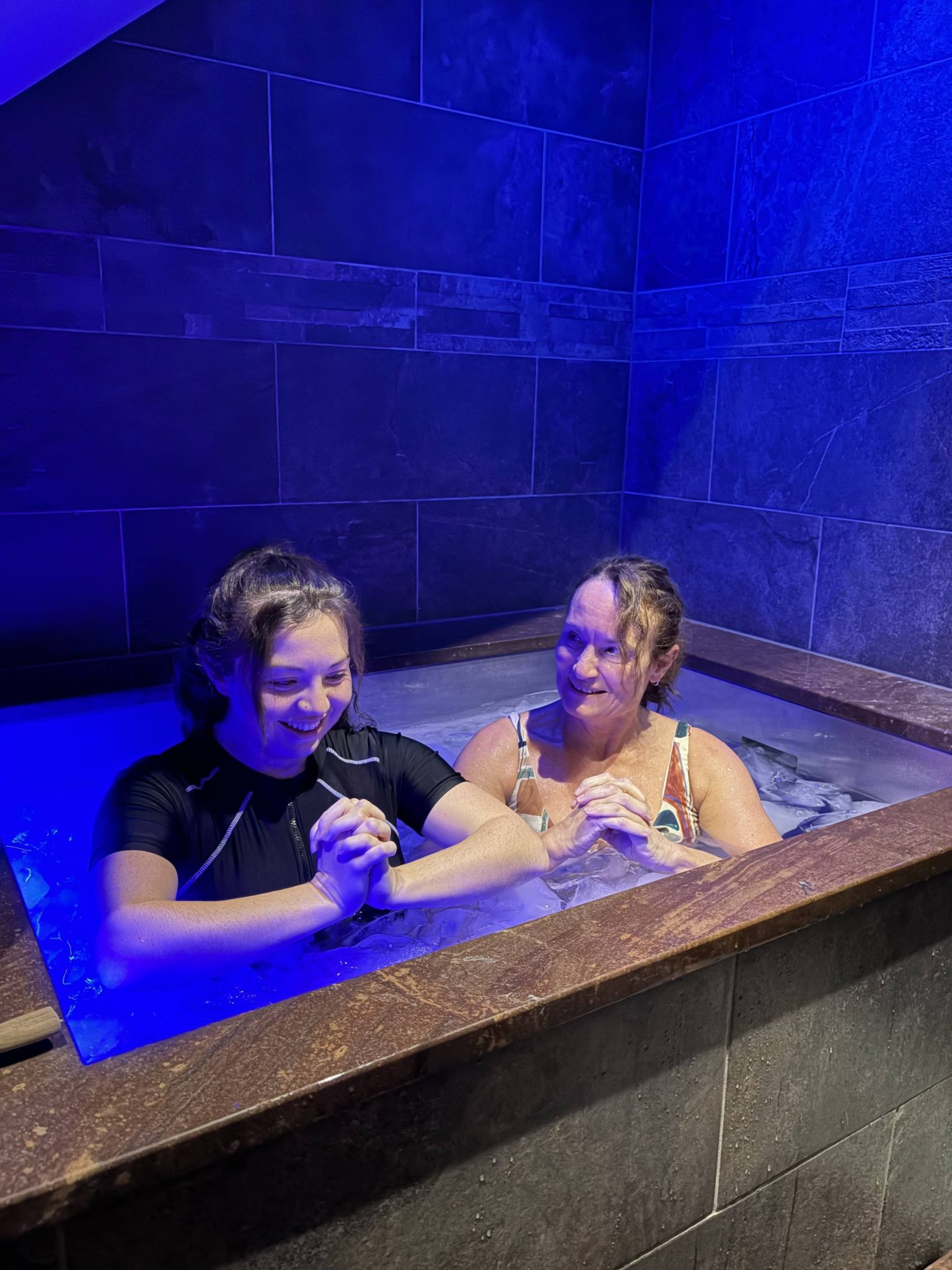
Ice Baths offer a range of benefits, which is why they have moved beyond the world of professional athletes. From helping recovery after exercise, reducing muscle soreness, and supporting mental well-being. The overall energy boost and refreshed feeling are making the therapy more and more popular, as people choose to include it in their wellness routine to optimise it.
However, while these benefits are anecdotally noted, ice baths aren’t a cure for an ailment, and the therapy isn’t for everyone.
In this article, we explore cold water benefits and reasons why you should try it.
What is an ice bath?
Ice baths, or cold therapy, involves immersing part or all of your body into cold water for a period of time.
There isn’t a set temperature that classifies as an ice bath, and people will use very cold water while others might begin with a more moderate temperature and build up to getting colder as their tolerance increases.
What started out as a recovery process for professional athletes has crossed the border to the lives of everyday people, meaning today, you don’t have to be an athlete to try it.
But it is important to remember the goal. It isn’t to get the water as cold as possible. The goal should fit with your own personal fitness and well-being objectives.
So, what happens when you step into an ice bath?
What are the benefits of ice baths?
The research into the benefits of ice baths is still developing. Some of the benefits are more established than others, with some simply being discussed benefits from users rather than scientifically proven.
It is important to remember that everyone experiences an ice bath and the effects of it differently. So, if you try it, your experience will differ from others who try it.
For many people, the appeal of trying an ice bath stems from the combination of physical recovery and mental well-being. Ice baths make them feel physically and mentally energised.
These benefits are great reasons to try cold water therapy.
1. Ice baths may help reduce muscle soreness
One of the biggest benefits of ice baths is that it might help to reduce the sensation of muscle soreness.
If you’re experiencing Delayed Onset Muscle Soreness (DOMS) after an exercise session, getting into an ice bath has been reported to help ease the pain, making movements easier and more comfortable.
Of course, it isn’t just athletes that get DOMS. If you are returning to exercising, trying something new, simply pushing yourself a little harder or working in a physically demanding job, DOMS can sneak up on you and soothing the pain is one of the reasons why you should also try cold water immersion.
We must mention though, that cold water therapy could help lessen the pain but it won’t make DOMS disappear completely.
2. They can help you feel more recovered
We’ve all experienced a rough day after a work out, whether you are experiencing DOMS, simply feel a bit lethargic, or movement feels a little heavier.
There is a difference between mentally and physically feeling recovered and often an ice bath can help with the mental side of it all.
People often choose to use an ice bath because it helps them feel:
- Less stiff
- Less sore
- More refreshed
- More comfortable moving around
Of course, all of these feelings are invaluable in everyday life as you:
- Go to work
- Walk upstairs
- Do other exercise
- Drive
- Continue with your normal routine
It is easy to take getting off the sofa for granted when you can do it without pain, but when the action reminds you of yesterday’s workout, suddenly you don’t want to move again and you are thinking back to the days when you didn’t appreciate it.
3. Cold water therapy can provide a refreshing energy boost
One of the strongest lifestyle benefits of cold water therapy is the feelings people experience after a dip.
Some people have reported feeling more awake and alert immediately after the experience, making it a great way to start your day, finish a long day or try to stop feeling sluggish.
Note that this doesn’t mean that you can pull an all-nighter then jump in the ice bath and be ready for the day. Nor will it do the job of a morning (or mid-afternoon) caffeine hit.
4. Ice baths can help you build mental resilience
If you haven’t tried an ice bath, I am sure even the thought of it is proving how much of a mental challenge it is. Dipping a toe in the cold sea comes with a build up, let alone dunking your whole body in.
But this is one of the benefits of ice baths. Building up resilience is a mental challenge and the feeling of achieving something is a great feeling at the end.
There is lots to think about when doing an ice bath:
- Controlling your breathing
- Staying calm
- Managing the discomfort
The more you do it, the better at each of these you get. After all, the saying “practice makes perfect” is a saying for a reason.
Adding to the reasons to try an ice bath is the practice of deep breathing.
The initial shock of the cold against the body can make breathing feel faster or more difficult. Regularly going into ice baths teaches you to slow down, focus and regain control of your breathing.
Looking outside of the ice bath, people have claimed that the process has helped them better handle discomfort. For example, learning breathwork techniques is handy outside of the ice bath as you can implement them in other situations.
This isn’t about being tough. It is about learning how to stay calm when things get uncomfortable.
5. Ice baths can encourage you to make time for recovery
It is easy to get caught up in doing more.
More exercise. More work. More activities. More things on your to-do list.
But one of the benefits of cold water therapy is that it can encourage you to stop and think about recovery too.
Whether you exercise regularly, have a physically demanding job or simply live a busy life, your body needs time to rest and recover.
Taking an ice bath can become part of a wider wellness routine that reminds you to focus on how your body is feeling.
Of course, an ice bath shouldn’t be the only form of recovery you rely on. Other important parts of looking after your body include:
- Getting enough sleep
- Staying hydrated
- Eating a balanced diet
- Taking time to rest
- Gentle movement and mobility
- Listening to what your body needs
But setting aside time for an ice bath can be a good reminder that recovery isn’t something you should only think about when you’re already exhausted or sore.
It can be something you actively make time for.
After all, taking care of your body isn’t just about how hard you can push yourself. It is also about giving yourself the time and space to recover afterwards.
Who can benefit from cold water therapy?
One of the biggest changes in the world of ice baths is that they are no longer seen as something exclusively for professional athletes.
You don’t need to be training for a marathon, competing in a sport or spending hours in the gym every day to be interested in the benefits of ice baths.
People might choose to try cold water therapy for a number of different reasons, including:
- Casual exercisers experiencing muscle soreness
- People returning to exercise after a break
- Those trying a new type of exercise
- People with physically demanding jobs
- Anyone looking to add something different to their wellness routine
- People who enjoy challenging themselves and trying new experiences
Of course, everyone has their own reasons for trying an ice bath.
For one person, it might be about recovering after a new exercise class. For another, it might be about feeling refreshed after a long day. And for someone else, it could simply be about taking time out of their routine to focus on themselves.
The important thing is finding something that works for your lifestyle and your own personal health and well-being goals.
Are ice baths safe?
While there are a number of potential benefits of ice baths, it is important to remember that cold water therapy isn’t suitable for everyone.
The cold can place stress on the body, which is why it is important to approach ice baths sensibly rather than trying to stay in for as long as possible or making the water as cold as possible.
Longer and colder doesn’t necessarily mean better.
If you are trying cold water therapy, pay attention to how you feel and stop if you start to feel:
- Dizzy
- Faint
- Excessively numb
- Unwell
There are also certain medical conditions where cold-water immersion may not be suitable, so if you have any concerns about your health, it is important to seek medical advice before trying an ice bath.
If you find that ice baths aren’t right for you, there are other forms of cold immersion therapy for you, for example cryotherapy. Additionally, depending on your objectives, you might find other therapy forms such as hyperbaric oxygen chamber or controlled saunas.
Cold water therapy should never be about forcing yourself to push through a dangerous level of discomfort.
The aim should be to have a controlled experience that works for you and your individual goals.
How do you get started with cold water therapy?
If you’ve never tried an ice bath before, there is no need to jump straight into the coldest water possible.
Like many things, it is best to start gradually and build up your tolerance over time.
Focus on how your body responds and remember that you don’t need to compete with anyone else.
When starting out:
- Don’t assume colder is better
- Don’t assume longer is better
- Take time to get used to the experience
- Focus on controlling your breathing
- Listen to your body
- Stop if you feel unwell
For many people, having an experienced team on hand can also make trying cold water therapy feel less daunting, particularly if it is your first time.
Cold water therapy can also form part of a wider contrast therapy experience, which combines periods of heat and cold within the same session. For those who are interested in exploring both, this offers an opportunity to experience the two therapies together, with guidance from an experienced team.
So, what are the benefits of ice baths?
There are a number of potential benefits of ice baths, and this is one of the reasons cold water therapy has become increasingly popular beyond the world of professional sport.
For some people, an ice bath may help reduce the sensation of muscle soreness and make them feel less stiff after physical activity.
Others enjoy the refreshed and energised feeling they experience afterwards.
And for many, the experience itself can be a mental challenge that encourages controlled breathing, focus and learning how to stay calm when things get uncomfortable.
Finally, making time for an ice bath can also encourage you to think about the importance of recovery and making time to look after yourself.
However, it is important to remember that an ice bath isn’t a miracle treatment.
The experience can be different for everyone, and many of the benefits of cold water therapy are still being researched. It also isn’t suitable for everyone.
For those looking to explore their wellness routine further, contrast therapy is another option to consider. By alternating between hot and cold experiences, it brings together two different approaches to relaxation and recovery, offering another way to make time for your wellbeing.
But whether you’re recovering after exercise, feeling the effects of a physically demanding day or simply interested in trying something new as part of your wellness routine, cold water therapy could be worth exploring.
The key is to approach it safely, listen to your body and find an experience that works for you.
If you are interested in trying cold water immersion therapy, book a visit to our facility or get in touch with our team to learn more about our ice bath experience and how it might help you.